October 29, 2026
Petestep Tackles the Hardest Part of Wing-in-Ground Flight: Getting Off the Water
Swedish hull-technology company leads the hydrodynamic and aerodynamic design of an unmanned ground-effect craft for ISR and logistics in the Baltic Sea, funded by Sweden’s innovation agency
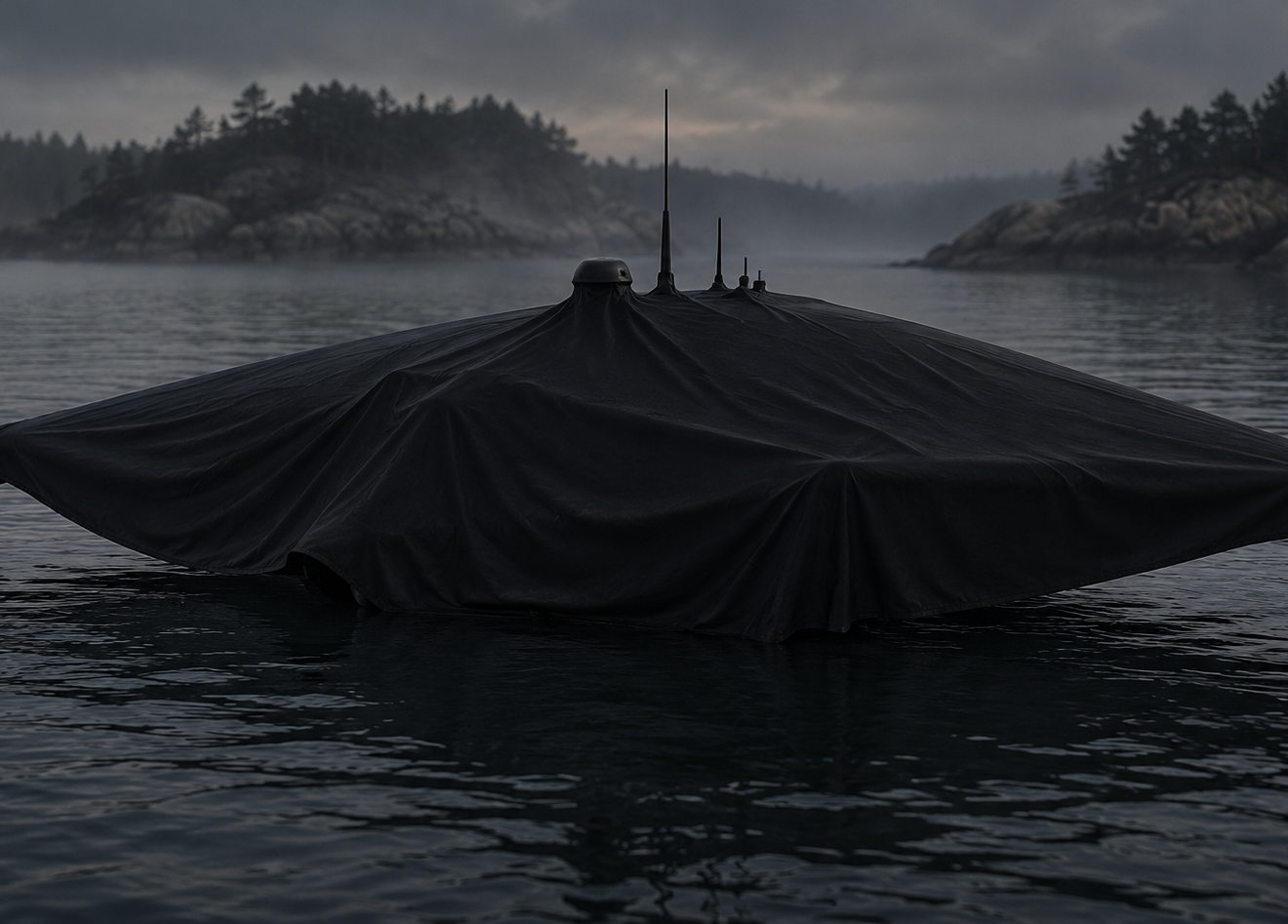
STOCKHOLM — Oct 29, 2026 — Swedish hull-technology company Petestep is leading the hydrodynamic and aerodynamic design of REINE, an unmanned wing-in-ground (WIG) craft under development for operations in the Baltic Sea. Petestep’s task is the phase that has long held the concept back: the transition from high speed on the water to flight just above the surface. The project is funded by Vinnova, Sweden’s innovation agency, and brings together Petestep, STILFOLD, EmbeddedArt Group and the state-owned research institute RISE.
Speed and payload for the littorals
A WIG craft flies just above the water, riding a cushion of air between its wing and the surface that cuts drag. The goal is to combine the speed of an aircraft with the payload of a ship: faster than a conventional unmanned surface vessel (USV), with more endurance than a helicopter. The platform is intended to be configurable for coastal and archipelago missions, from intelligence, surveillance and reconnaissance (ISR) to moving equipment and supplies.
Sweden joined NATO in 2024, putting the Baltic Sea at the center of allied security. Its shallow, island-dense waters are typical of the littoral environments where unmanned systems are drawing growing attention.
Solving hump drag
Before a WIG craft can fly, it must accelerate through a resistance peak on the water that naval architects call hump drag. That is where Petestep comes in. The company’s patented hull technology uses deflectors that capture the energy in spray and turn it into lift, reducing both drag and wetted surface. The technology is in service today on planing craft from 13 to 115 feet (4 to 35 meters).
On REINE, Petestep leads the detailed hydrodynamic and aerodynamic design. Using its CFD-based design process, the company models the hull, takeoff and ground-effect flight in a single simulation chain, from standstill on the water to flight and maneuvering. Petestep then supports the build and the on-water trials.
Four partners, one demonstrator
STILFOLD originated the concept and leads design, engineering and manufacturing. Its technology uses robots to fold flat sheet metal along curved lines into rigid structures, with no product-specific tooling. Design changes are made in software rather than in new dies or molds, which supports fast iteration and, over time, distributed production close to the point of need. EmbeddedArt Group, a Swedish defense-technology company, develops the electrical system and control system. RISE coordinates the project and provides independent measurement and validation.
The project runs from October 2026 to October 2027 and concludes with a demonstrator tested on the water in the Baltic Sea, aiming at validation at Technology Readiness Level (TRL) 5. The trials will compare measured performance with predictions and identify what the next development phase requires.
Vinnova is funding the project with SEK 6.7 million (about $670,000) under its call Needs-driven defense innovation for a secure Baltic Sea region, part of Sweden’s civil-military innovation program.
Proven with US builders for government vessels
Petestep’s technology is already used in government and unmanned craft. Silverback Marine built a Petestep-hulled patrol boat for New Mexico State Parks, and the technology is used in unmanned surface vessels in countries including the United States and Turkey. REINE brings it into Swedish defense innovation.
“Ground-effect craft have been around for six decades, but the transition from water to air has at times held them back,” said Jonas Danielsson, CEO of Petestep. “That is exactly where our technology, our experience with planing hulls and our advanced flow simulations make a difference.”
“On this project we simulate the entire sequence, from standing still to flight, in one process,” Danielsson said. “It is also a chance to demonstrate our defense capabilities at home, and contributing to security in the Baltic Sea region feels especially meaningful.”
“We already work with US builders on government and unmanned craft, but on more conventional USV platforms” Danielsson added. “We welcome conversations with US and allied partners about how our technology and know-how can support their missions.”
About REINE
• Full title: REINE – Next-generation surface-skimming maritime drone for enhanced military capability in the Baltic Sea
• Funding: Vinnova, Sweden’s innovation agency; call: Needs-driven defense innovation for a secure Baltic Sea region
• Grant: SEK 6.7 million (about $670,000) in total
• Duration: Oct. 9, 2026 – Oct. 8, 2027
• Partners: RISE Research Institutes of Sweden (coordinator), STILFOLD AB, EmbeddedArt Group AB and Petestep AB
About Petestep
Petestep AB is a Swedish technology company that develops patented hull technology for planing boats. Petestep designs hulls together with boatbuilders and licenses its technology to them. The technology is used in recreational, commercial, government and unmanned craft from 13 to 115 feet (4 to 35 meters). Learn more at petestep.com.
Media contact
Jonas Danielsson, CEO, Petestep AB
+46 70 766 26 82 | jonas@petestep.com